Showing posts with label Rose Vastola. Show all posts
Thursday, October 30, 2014
Tuesday, October 21, 2014
Process 2.3
These photos share the unique capabilities of the material I working with which is iron powder.
When placed out on the table the powder references sand like material and I immediately started to think about sand art and sand divination (geomancy)
Monday, October 13, 2014
Project Process 2.1
Interesting website on all things magnetically related.
http://www.coolmagnetman.com/magattr.htm
Artist Working with Magnets
Sachiko Kodama
http://www.kodama.hc.uec.ac.jp/spiral/
Ferrofluids 
http://en.wikipedia.org/wiki/Ferrofluid
The area of ferrofluids is quite new, and very interesting. Ferrofluid is made of small particles (~10nm) of magnetite (Fe3O4) surrounded by a surfactant such as tetramethylammonium hydroxide. The surfactant is needed to keep the particles of magnetite from agglomerating (clumping together) due to magnetic and van der Waals interactions. It's like having a slippery skin around the small particle of magnetite. Thermal motion helps, but is not sufficient by itself. A group of these prepared particles is like a solution that acts like a medium density liquid which is affected by magnetic fields. When a magnet is brought near it, the liquid splits up and starts to group itself into spikes or hairs along the magnetic field lines as shown in the photos. It is used to seal rotating shafts, and in speakers to help dampen the vibrations of the speaker coil, and help cool the coil. Great stuff to play with!
http://www.coolmagnetman.com/magattr.htm
Artist Working with Magnets
Sachiko Kodama
http://www.kodama.hc.uec.ac.jp/spiral/
“Morpho Towers--Two Standing Spirals” is an installation that consists of two ferrofluid sculptures that moves synthetically to music. The two spiral towers stand on a large plate that hold ferrofluid. When the music starts, the magnetic field around the tower is strengthened. Spikes of ferrofluid are born from the bottom plate and move up, trembling and rotating around the edge of the iron spiral.
The body of the tower was made by a new technique called “ferrofluid sculpture” that enables artists to create dynamic sculptures with fluid materials. This technique uses one electromagnet, and its iron core is extended and sculpted. The ferrofluid covers the sculpted surface of a three-dimensional iron shape that was made on an electronic NC lathe. The movement of the spikes in the fluid is controlled dynamically on the surface by adjusting the power of the electromagnet. The shape of the iron body is designed as helical so that the fluid can move to the top of the helical tower when the magnetic field is strong enough.
http://en.wikipedia.org/wiki/Ferrofluid
Other Magnetic Objects That react to one another
http://www.coolmagnetman.com/magmore.htm
Wednesday, October 1, 2014
Final Documentation of Project 1 - Invisible Design
Documentation of my project
Documentation of in the inside of the piece
Thursday, September 25, 2014
Tuesday, September 16, 2014
more artist
Haroon Mirza
http://www.clickfolio.com/haroon/
http://www.newmuseum.org/exhibitions/view/preoccupied-waveforms
“Haroon Mirza: Preoccupied Waveforms,” 2012–13. Exhibition view: New Museum. Photo: Jesse Untracht-Oakner
http://www.coryarcangel.com/
http://www.clickfolio.com/haroon/
http://www.newmuseum.org/exhibitions/view/preoccupied-waveforms
Mirza uses simple industrial materials to radically transform the perceptual experience of architectural space. Over the past ten years, Mirza has deployed a range of analog and digital devices to create dynamic compositions of sound and light. His performances, kinetic sculptures, and immersive installations have made him one of the most celebrated young international artists working today. Mirza was the recipient of both the 2010 Northern Art Prize in the United Kingdom and the Silver Lion Award for most promising young artist at the 54th Venice Biennale (2011).
Mirza’s work is often distinguished by its improvised use of outmoded audiovisual technologies. Turntables, speaker cabinets, monitors, and more contemporary electronic equipment are rewired and integrated into objects that recall antiquated technologies, and work together to create new visual and auditory landscapes. More recently, Mirza has expanded his work to take on entire architectural environments. Strands of LED lights, fragments of video, and amplified electricity are programmed to disrupt and destabilize the exhibition space. Mirza often incorporates references to or even works by other artists into his installations and his pieces extend beyond formal experimentation to consider the social, historical, and political conditions in which his compositions are sited.
http://www.coryarcangel.com/
Some recorded audio
https://soundcloud.com/rose-redd/sets/poetically-political
Recording space (Audio was gathered and listened to on SB-75 monitors)
Tampa International mall ( recorded audio here) 9/13/14
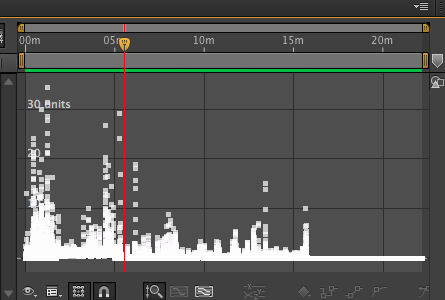
^ after effect software audio manipulation with image - testing out how to work with waveforms to manipulate an image - The image of the crystal is just a test image.
Here are tutorials I am using to create this effect
http://library.creativecow.net/articles/devis_andrew/audio-control-1/video-tutorial
Where is a wave form from delay tutorial in after effects
http://play.macprovideo.com/audio-concepts-104-delay-and-reverb-effects/1
Sunday, September 14, 2014
Process 1.1 Comfortably Unaware
As I examined my recordings I realized that there was a interest in the sound of the buildings then the actual sounds of the people I was trying to "spy" on. Then here are some of the following questions I began to ask myself.
- What is important about the buildings I'm in
- What is important about the device that I am recording this audio on.
- Is it important that the space is still existing. ( The idea of absent physical refferences)
- How can I create a interesting idea about space and privacy with area and atmosphere?
I began to realize that atmosphere and reflections on spaces that are not present or not longer present was a interesting idea.
In Today's world technology increases and changes the way that we go about our life. It has changed the way we listen to music and walk through our world. We become sheltered within these spaces that we create for our selfs with our personalized wardrobe of a world from all the designs we make about what we should own and the kind of person we should be. As technology increases it depletes many variables as they become basically exist or no longer useful. We walk every day throw old buildings, new buildings old buildings that are made to look new and new ones that are made to look old. This rekindling of the past in the present is very interesting to me. Is it because we realized that some decisions as far as aesthetic and space were betters then others or is it just a way to comfort our minds into know what works better. I felt like it would interesting to record a space for the actually integrity of the build. All the cracks and ticks that a home make as it is slowly begging it's joinery into settling in. I feel to best execute further ideas about the space would be to record newer buildings built within the past two years with older technology that are now considered absolute, and older phone with the most modern state of the art recording devices I can manage to get my hands of. (My department as access to microphones and plenty of devices I can pick from).
Over the weekend and the next week I will collecting my audio and continue to think about our unconscious decisions to create our own spaces, what makes these space comfortable and how do these spaces and sounds reflect our society.
I will:
- Collect audio
- Document spaces ( phots, possible take a visual reference to the space like business cards, a pieces of the chair, a portion of the carpet etc.. )
- Write reflections on how the space personally makes me feel as well as how other people react within them ( all these space are going to be public)
-
What is interesting about how we react within the spaces that we put our selves in.
What is important about preserving the old with the new - why do we hold onto some ideas and let others go - is it recycled or build off of or just completely destroyed,
Below is an old audio log that I have been gathering the data of my recording. I think I want to record at a point of the day were we are most unaware and most un- absorbed by our surrounds. For me I feel like this would be very early in the morning or around 6 or 7 pm.
-Thinking about these objects project the noise from which they were collected.
- What is important about the buildings I'm in
- What is important about the device that I am recording this audio on.
- Is it important that the space is still existing. ( The idea of absent physical refferences)
- How can I create a interesting idea about space and privacy with area and atmosphere?
I began to realize that atmosphere and reflections on spaces that are not present or not longer present was a interesting idea.
In Today's world technology increases and changes the way that we go about our life. It has changed the way we listen to music and walk through our world. We become sheltered within these spaces that we create for our selfs with our personalized wardrobe of a world from all the designs we make about what we should own and the kind of person we should be. As technology increases it depletes many variables as they become basically exist or no longer useful. We walk every day throw old buildings, new buildings old buildings that are made to look new and new ones that are made to look old. This rekindling of the past in the present is very interesting to me. Is it because we realized that some decisions as far as aesthetic and space were betters then others or is it just a way to comfort our minds into know what works better. I felt like it would interesting to record a space for the actually integrity of the build. All the cracks and ticks that a home make as it is slowly begging it's joinery into settling in. I feel to best execute further ideas about the space would be to record newer buildings built within the past two years with older technology that are now considered absolute, and older phone with the most modern state of the art recording devices I can manage to get my hands of. (My department as access to microphones and plenty of devices I can pick from).
Over the weekend and the next week I will collecting my audio and continue to think about our unconscious decisions to create our own spaces, what makes these space comfortable and how do these spaces and sounds reflect our society.
I will:
- Collect audio
- Document spaces ( phots, possible take a visual reference to the space like business cards, a pieces of the chair, a portion of the carpet etc.. )
- Write reflections on how the space personally makes me feel as well as how other people react within them ( all these space are going to be public)
-
What is interesting about how we react within the spaces that we put our selves in.
What is important about preserving the old with the new - why do we hold onto some ideas and let others go - is it recycled or build off of or just completely destroyed,
Below is an old audio log that I have been gathering the data of my recording. I think I want to record at a point of the day were we are most unaware and most un- absorbed by our surrounds. For me I feel like this would be very early in the morning or around 6 or 7 pm.
-Thinking about these objects project the noise from which they were collected.
Thursday, September 11, 2014
Artist Research
artist who are working with similar ideas:
Susan Philipsz's 'Lowlands'
https://www.youtube.com/watch?v=UWeKzTDi-OA
For her 2012 reworking, Philipsz has isolated only the viola and cello parts. Recorded onto multiple channels, the piece is a note-by-note deconstruction of the original composition, replete with fraught silence. These charged absences call attention to the fact that other instruments—and the musicians who played them—are absent.
Richard Garet
"Before Me"
https://www.youtube.com/watch?v=YkV-P_TkJk4
Stephen Vitiello
"A Bell for Every Minute."
http://www.moma.org/interactives/exhibitions/2013/soundings/artists/13/works/
Subscribe to:
Posts (Atom)